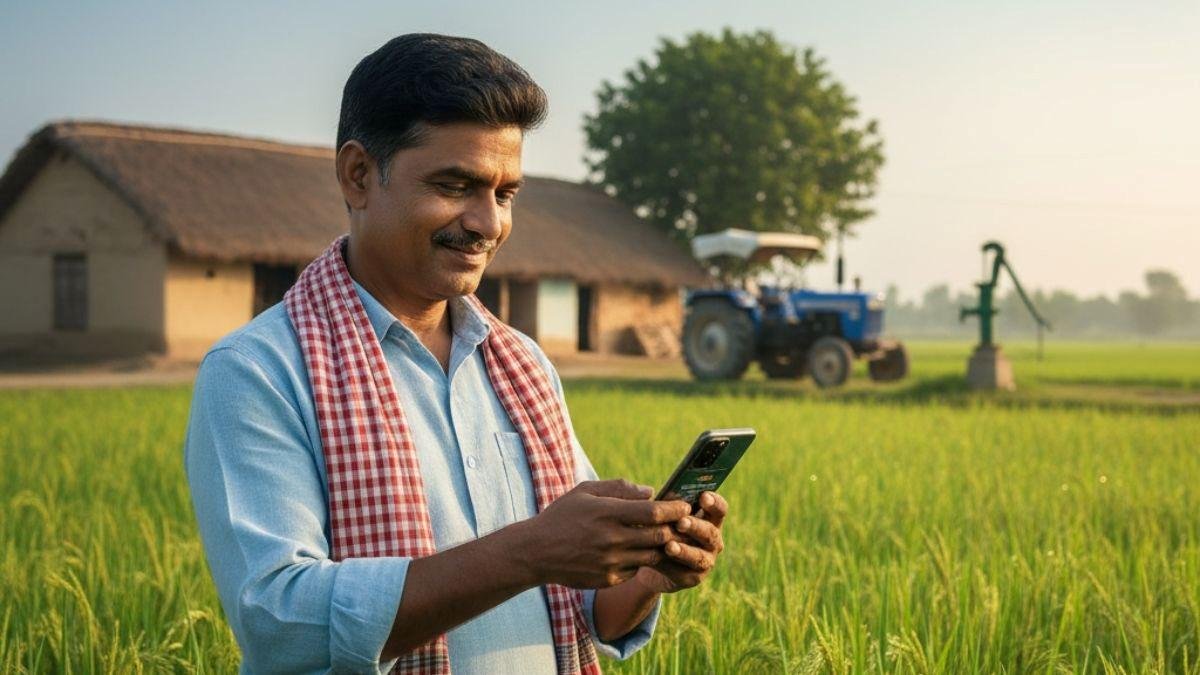
For decades, buying agricultural equipment in India has been a largely offline experience.
A farmer looking for a tractor, rotavator, harvester, sprayer, cultivator, or other agricultural equipment would typically depend on local dealers, word-of-mouth recommendations, village visits, exhibitions, or manufacturer representatives.
That model is changing.
As Indian agriculture becomes increasingly technology-driven, the way farmers discover, compare, evaluate, and purchase agricultural equipment is also evolving. The future of agricultural equipment buying will not simply be about selling more machines—it will be about connecting the right farmer with the right equipment, the right dealer, and the right information at the right time.
India is already moving toward greater farm mechanization. Government initiatives such as the Sub-Mission on Agricultural Mechanization (SMAM) support the adoption of agricultural machinery and also promote Custom Hiring Centres, Farm Machinery Banks, and technology-enabled access to equipment.
The next major transformation will be digital.
From Traditional Buying to Digital Discovery
The agricultural equipment buying journey is becoming more informed.
Before approaching a dealer, farmers increasingly want to understand:
- Which machine is suitable for their crop?
- What horsepower or capacity do they need?
- Which brand offers the right features?
- What is the approximate price?
- Is financing available?
- Is a subsidy applicable?
- Where is the nearest dealer?
- What after-sales service is available?
- Can the equipment be rented instead of purchased?
This creates an opportunity for digital platforms to become the starting point of the buying journey.
Instead of discovering equipment only through a dealer visit, farmers can first discover products online, submit an enquiry, compare options, and then connect with an appropriate dealer.
The dealer relationship remains important—but the discovery process is becoming digital.
1. Farmers Will Search Before They Visit
The future buyer will increasingly research agricultural equipment before entering a dealership.
A farmer may search for:
“Best tractor for 10-acre cotton farming”
or
“Rotavator for soybean farming near me”
or
“Affordable power sprayer with subsidy”
This changes the role of agricultural equipment dealers.
Dealers will no longer compete only on physical presence. They will also compete on digital visibility, response time, product information, trust, and customer experience.
A strong digital presence can help dealers reach potential customers much earlier in the buying journey.
2. The Rise of Pre-Qualified Leads
One of the biggest changes will be the shift from simply generating enquiries to generating relevant enquiries.
A dealer does not need hundreds of random enquiries.
They need customers who actually have a requirement.
For example:
Farmer → Davangere → 15 acres → maize farming → looking for a 50 HP tractor → purchase planned within 30 days.
This is significantly more valuable than an enquiry containing only a name and phone number.
The future of agricultural equipment sales will therefore move toward data-driven and pre-qualified lead generation.
Platforms can use information such as:
- Location
- Crop
- Landholding
- Equipment requirement
- Preferred brand
- Budget
- Purchase timeline
- Financing requirement
- Existing machinery
- Dealer availability
to create better matches between farmers and dealers.
3. AI Will Transform Equipment Recommendations
Artificial Intelligence can take digital agricultural buying one step further.
Instead of simply showing a list of tractors or implements, an AI-powered system could understand the farmer's requirement and recommend suitable equipment.
For example:
Farmer: “I have 12 acres of cotton farming in Karnataka and need a tractor mainly for cultivation and spraying.”
An intelligent platform could analyze the requirement and recommend suitable tractor categories based on horsepower, crop, acreage, implements, terrain, and usage.
The same concept can work for:
- Tractors
- Harvesters
- Rotavators
- Seed drills
- Sprayers
- Cultivators
- Drones
- Power tillers
- Irrigation equipment
- Post-harvest machinery
AI can turn equipment discovery from a product search into a requirement-based recommendation.
The wider agricultural ecosystem is already moving toward AI, IoT, and digital decision-support technologies. The Government of India has highlighted AI and digital technologies as part of the broader modernization of agriculture.
4. Location-Based Dealer Matching Will Become Critical
Agricultural equipment is not a purely e-commerce product.
A farmer buying a tractor or harvester also needs:
Dealer + Demonstration + Financing + Delivery + Service + Spare Parts
That makes local dealer connectivity extremely important.
The future buying journey could look like:
Farmer Requirement → Digital Enquiry → Requirement Qualification → Dealer Matching → Dealer Contact → Demo → Financing → Purchase → Service
Instead of sending every enquiry to multiple dealers, technology can intelligently route the opportunity to the most relevant dealer based on location, brand, territory, product category, and availability.
This creates a better experience for both sides.
For farmers:
Better recommendations and faster responses.
For dealers:
Higher-quality opportunities and less wasted sales effort.
5. Custom Hiring Will Change the Meaning of “Buying”
Not every farmer needs to own every machine.
This is particularly important for small and marginal farmers.
Custom Hiring Centres and machinery rental models allow farmers to access equipment when they need it without bearing the entire cost of ownership.
Government agricultural mechanization programs support Custom Hiring Centres and Farm Machinery Banks for precisely this purpose.
The future agricultural equipment marketplace may therefore not simply ask:
“What machine do you want to buy?”
It may ask:
“What agricultural operation do you need to complete?”
The answer could result in:
- Buy a machine
- Rent a machine
- Hire a service
- Purchase used equipment
- Finance new equipment
- Share machinery through a local machinery network
This creates a much larger opportunity for digital platforms.
6. Financing Will Become Part of the Buying Journey
Price is one of the biggest considerations when purchasing agricultural machinery.
Therefore, equipment discovery, financing, subsidy information, and dealer connectivity will increasingly become interconnected.
A future digital journey could allow a farmer to:
- Select the required equipment.
- Compare suitable models.
- Check estimated pricing.
- Explore financing options.
- Understand applicable government assistance.
- Connect with a nearby dealer.
- Schedule a demonstration.
- Track the purchase process.
Government mechanization programs already use digital systems for applications, tracking, and Direct Benefit Transfer mechanisms.
The opportunity is to make the entire customer journey simpler.
7. Regional Languages Will Drive Adoption
India's agricultural market is multilingual.
A farmer should not have to understand complicated English terminology to discover agricultural machinery.
The next generation of agricultural platforms will need to support:
- Marathi
- Hindi
- Telugu
- Tamil
- Kannada
- Gujarati
- Punjabi
- Bengali
- Other regional languages
Voice-based interfaces will also become increasingly important.
A farmer could simply say:
“ನನಗೆ 45 HP ಟ್ರ್ಯಾಕ್ಟರ್ ಬೇಕು.”
or
“ನನ್ನ ಊರಿನ ಹತ್ತಿರ ರೊಟಾವೇಟರ್ ಯಾರು ಕೊಡುತ್ತಾರೆ?”
and receive relevant recommendations.
This can make agricultural technology significantly more accessible.
8. Dealer CRM Will Become a Competitive Advantage
Digital transformation is not only about the farmer.
Dealers also need better technology.
Traditional dealer management often involves spreadsheets, phone calls, WhatsApp messages, notebooks, and disconnected customer records.
Modern agricultural dealerships will increasingly use CRM systems to manage:
- Leads
- Follow-ups
- Customer profiles
- Test drives/demos
- Quotations
- Financing
- Sales pipeline
- Lost opportunities
- Service reminders
- Repeat purchases
- Territory performance
A dealer should be able to answer a simple question:
“How many serious tractor buyers do I have in my territory this month?”
A modern CRM should provide that answer instantly.
9. Data Will Become the New Sales Intelligence
Agricultural equipment businesses generate valuable data every day.
When analyzed properly, this data can answer questions such as:
- Which districts have the highest demand?
- Which brands are generating the most enquiries?
- Which products are trending?
- Which crop segments are growing?
- Which dealers convert the most leads?
- How long does a customer take to purchase?
- Which enquiries are being lost?
- Which areas have high demand but low dealer coverage?
This changes dealership management from intuition-based decision-making to data-driven decision-making.
For manufacturers and dealers, this intelligence can influence inventory planning, territory expansion, marketing budgets, and sales strategies.
10. Trust Will Remain More Important Than Technology
Despite digital transformation, agricultural equipment is still a high-value purchase.
Farmers need confidence before making the decision.
They want to know:
Will this machine perform well?
Can I get service nearby?
Are spare parts available?
Can another farmer recommend it?
Will the dealer support me after the sale?
Therefore, the future isn't about replacing dealers with technology.
It is about using technology to make the dealer-farmer relationship stronger.
Digital platforms should bring transparency and convenience while maintaining the trust of local agricultural communities.
What Will the Future Buying Journey Look Like?
The traditional journey:
Farmer → Local Dealer → Product Information → Negotiation → Purchase
could evolve into:
Farmer Requirement → Digital Discovery → AI Recommendation → Qualified Lead → Dealer Matching → Demo → Financing → Purchase → Digital Service
This is a fundamental shift.
The agricultural equipment industry is moving from a product-centric model toward a customer-centric ecosystem.
The Opportunity for Agricultural Equipment Dealers
For dealers, the message is simple:
Digital transformation is no longer optional.
A dealership that combines:
- Strong local relationships
- Digital lead generation
- CRM
- Fast follow-ups
- Product expertise
- Financing support
- Demonstrations
- After-sales service
- Data analytics
will be better positioned for the next generation of agricultural customers.
The winning dealer of the future may not be the dealer with the biggest showroom.
It may be the dealer who can identify the right customer, respond faster, understand the customer's requirement, and provide the right equipment at the right time.
The Future Is Connected
The future of agricultural equipment buying in India will not be completely online or completely offline.
It will be connected.
Digital platforms will help farmers discover and evaluate equipment.
AI will help understand requirements.
Data will improve recommendations.
CRM will help dealers manage relationships.
Financing platforms will simplify purchasing.
Custom Hiring Centres will make machinery accessible without ownership.
And local dealers will continue to provide the most important part of the journey: trust, demonstration, delivery, and service.
India's agricultural mechanization ecosystem is already expanding through government support, digital platforms, custom hiring models, and emerging technologies.
The next step is to connect all these pieces.
The future of agricultural equipment buying is not just about buying machines.
It is about making the right machine easier to discover, easier to access, easier to finance, and easier to connect with the right dealer.
And that is where the next generation of agricultural technology platforms can make a real difference.
See how Samparkasetu connects the ecosystem
Explore our AI-powered CRM and lead-matching platform built for India's agri-dealers and OEMs.